News: Global Asbestos Awareness week 2026
Know your building, know your duty: take action on asbestos for Global Asbestos Awareness Week and use the practical support available to help you.
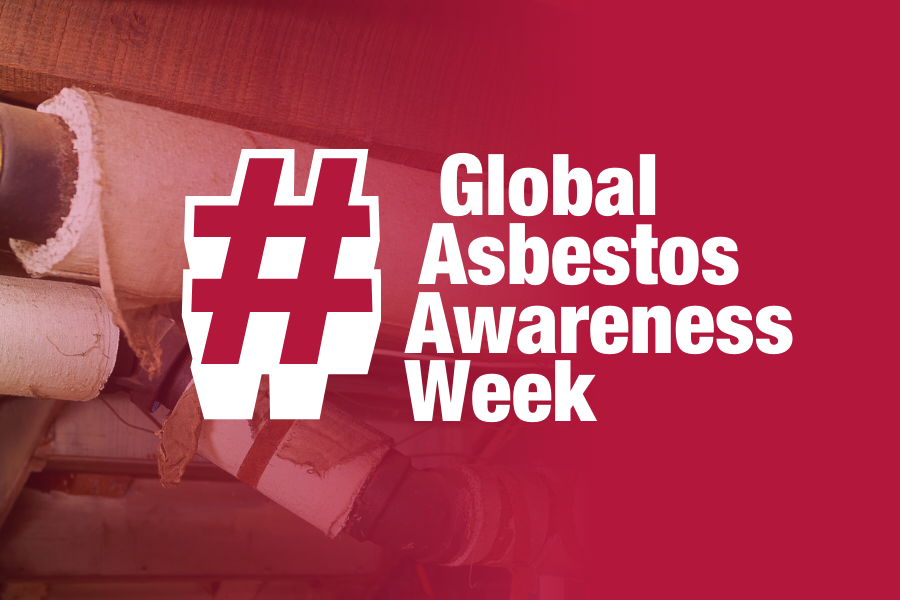
This Global Asbestos Awareness Week (1–7 April), the Health and Safety Executive (HSE) is calling on building owners, landlords, and tradespeople across Great Britain to take your responsibilities around asbestos seriously — and to use the practical support available to help you.
Asbestos was banned in the UK in 1999, but despite this, potential risks are still present in many buildings today. For dutyholders and people working in building and allied trades, effective management of asbestos is not optional — it is a legal requirement.
Do you know what’s in your building?
Any building built or refurbished before 2000 could contain asbestos-containing materials (ACMs). Asbestos was used extensively in construction between 1950 and 1980, and older premises may contain multiple ACMs in a variety of forms, including spray coatings, pipe lagging, insulating board, asbestos cement products such as profiled roof sheets and wall panels, floor coverings, and textured decorative coatings.
The duty to manage asbestos applies across a wide range of premises — from factories, warehouses, offices and shops to public buildings including hospitals, schools, places of worship, museums and libraries.
The risks are not static. As buildings age, ACMs can deteriorate. The law requires them to be actively monitored and managed to keep people safe. If historical records are incomplete, or you suspect materials have not been properly documented, now is the time to act.
The law is clear
There is a legal duty to manage asbestos in non-domestic premises and multi-occupancy domestic premises. Failing to meet that duty can result in penalties ranging from fines to prison sentences, with consequences that extend far beyond the legal — including reputational damage, impact on staff morale, and the substantial human cost of preventable illnesses which are often fatal.
There is no safe level of asbestos exposure and all work on asbestos-containing materials requires specific training and controls. It is illegal to carry out work without these and asbestos waste must be disposed of in accordance with the Control of Asbestos Regulations 2012 and other relevant legislation.
HSE inspectors can visit premises without warning to review the management of health and safety risks, with latest inspections having a particular emphasis on checking effective asbestos management. That includes construction sites of any size.
What you need to do
- HSE sets out a clear framework for managing asbestos in buildings:
- Arrange for an asbestos survey — or review any existing surveys
- Make a register and assess the risk
- Write an asbestos management plan (AMP)
Put your plan into action
Surveys are just the starting point. A clear up-to-date register and management plan is essential. These should not sit on a shelf as tick-box compliance documents, but function as practical, working tools. A robust register records inspections, tracks the condition and risk from ACMs and triggers prompt action if any deterioration is identified. Just as importantly, it ensures that anyone carrying out work on the building understands exactly where ACMs are located — such that the precautions required to work safely can be taken.
It is also important to remember that asbestos is often concealed beneath surfaces and within structural voids — under flooring, inside cavity walls and lift shafts. These hidden areas will require an intrusive refurbishment survey to identify any asbestos before work begins, to avoid accidental disturbance and exposure. If work begins and asbestos is discovered or suspected, stop work. If asbestos has been accidentally disturbed, it must be dealt with quickly and appropriately.
Staying safe during construction and maintenance work
Due to the nature of the job, workers in skilled construction and building trades are at particular risk of asbestos exposure. If you’re a tradesperson, or manage workers in building, maintenance and allied trades, make sure you know:
- what asbestos-containing materials look like and where they can be found
- how to safely carry out work without disturbing asbestos
- what to do when you come across it
- about asbestos awareness training.
Unlike ordinary dust, asbestos fibres are invisible – you cannot see, smell or feel them in the air or on your clothing.
Knowing what to look for – and what to do when you find it – is essential to protecting yourself and those around you.
Good management makes good business sense
Proactive, planned management of asbestos is not just a legal requirement – it makes sound financial and operational sense. Unexpected remediation costs and emergency responses are far more expensive and disruptive than planned, systematic management.
The risk of working unsafely with asbestos is not just harmful to health, failing to comply with the law risks financial penalties running into thousands of pounds, as well as significant negative publicity and lasting harm to people and communities.
Training and competence
Workers who are likely to disturb asbestos during their normal day-to-day work must be appropriately trained to work safely with asbestos or trained to be aware of it and stop work.
If you are responsible for maintenance and repair of non-domestic buildings or multi-occupancy domestic premises, you need the resources, skills, authority and training to ensure the ACMs are managed effectively.
Ensuring that maintenance teams, contractors and building occupants understand asbestos risks is essential to preventing accidental exposure.
HSE offers training courses such as the Managing Asbestos in Buildings course which introduces the responsibilities of dutyholders, relevant legislation, and the standards required to properly manage asbestos risks. Find out more and book via the HSE website.
Support and guidance available
Asbestos & You — free quick guide for trades with practical guidance for tradespeople on common examples of asbestos and where they can be found
Asbestos: Your Duty — guidance on legal duty and resources for building owners, landlords and those responsible for maintenance and repair
The HSE newsletter, subscribe for the latest guidance and updates.
HSE provides comprehensive free guidance and resources at hse.gov.uk.
The message this Global Asbestos Awareness Week is simple: know your building, know your duty, and act on both.